- Introduction
- 1. What Is Magnesium Oxide Board?
- 2. What Is MgO Board Made Of?
- 3. How Is Magnesium Oxide Board Manufactured?
- 4. Key Properties of Magnesium Oxide Board
- 5. Advantages and Limitations of MgO Board
- 6. Common Applications of Magnesium Oxide Board
- 7. MgO Board Compared with Other Building Boards
- 8. How to Choose the Right MgO Board
- 9. How Is MgO Board Tested for Quality and Performance?
- 10. Frequently Asked Questions About MgO Board
- Have Questions About MgO Board?
Introduction
Magnesium oxide board, commonly known as MgO board, is a mineral-based building panel used in a variety of construction and interior finishing applications. Depending on its formulation, reinforcement, thickness, and surface treatment, it can be used for interior walls, partitions, ceilings, subfloors, fire door components, decorative panels, and other building systems.
For importers, wholesalers, distributors, contractors, and building material specifiers, choosing the right MgO board involves more than comparing prices or checking a product description. Boards supplied by different manufacturers can vary considerably in composition, density, mechanical performance, moisture behavior, and quality control.
Understanding these differences is essential when selecting a product for a particular market or construction project.
In this guide, we explain what magnesium oxide board is, what it is made of, how it is manufactured, its main properties, where it can be used, and what buyers should check before placing an order.
1. What Is Magnesium Oxide Board?
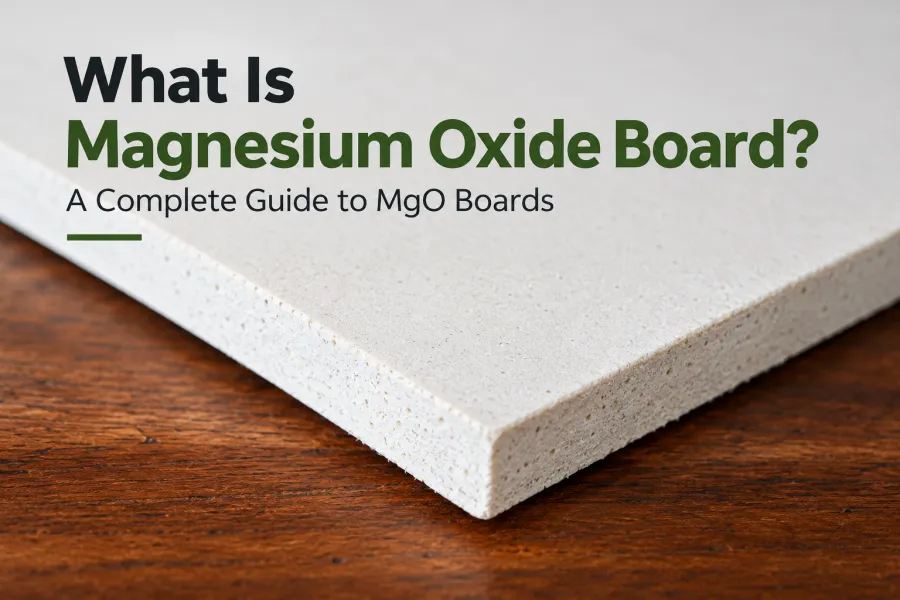
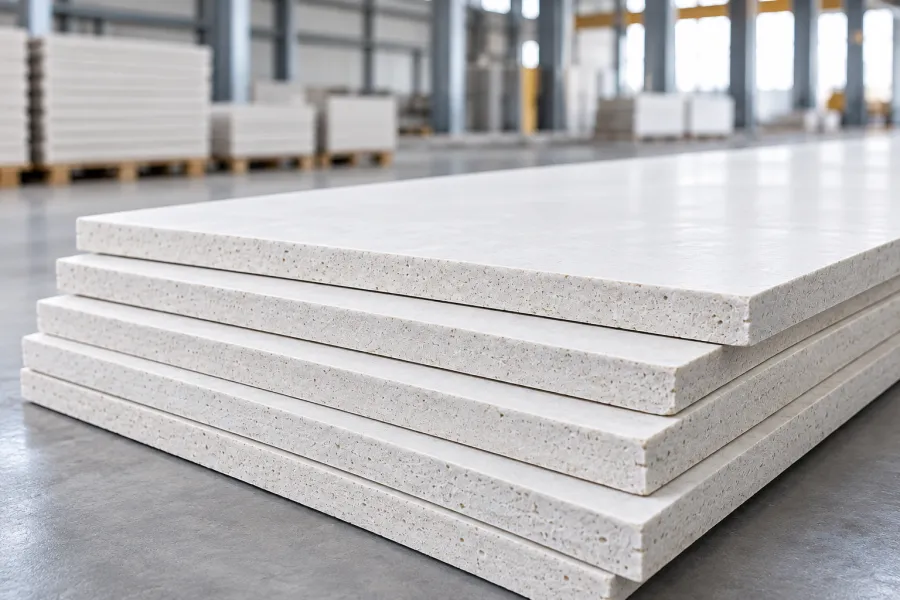
Magnesium oxide board is a rigid building panel made primarily from magnesium oxide and a binding system, together with other ingredients selected to achieve specific performance characteristics. It is commonly reinforced with fiberglass mesh or other reinforcing materials to improve its strength and handling properties.
The abbreviation MgO refers to magnesium oxide, a mineral compound used as a major component in these boards.
MgO boards are supplied in different thicknesses, densities, sizes, edge profiles, and surface finishes. Some products have a smooth, sanded surface, while others are laminated with decorative finishes or manufactured with specialized edges for particular installation systems.
Unlike conventional gypsum boards, MgO boards use a mineral-based matrix rather than a gypsum core. They are also different from cement boards, which typically rely on Portland cement or other cementitious binders. However, actual performance depends on the complete formulation and manufacturing process, not simply on the main ingredient.

2. What Is MgO Board Made Of?
Although magnesium oxide is the principal ingredient, an MgO board is a composite material. Its final properties are influenced by the binder, fillers, reinforcement, additives, and manufacturing conditions.
2.1 Magnesium Oxide
Magnesium oxide is a major mineral component of the board. Its characteristics, including purity and reactivity, can influence how the material behaves during mixing, curing, and subsequent use.
Raw material selection and consistency are important because variations in the raw materials may affect production stability and the finished board’s performance.
2.2 The Binding System
The binding system helps the ingredients form a solid, cohesive panel.
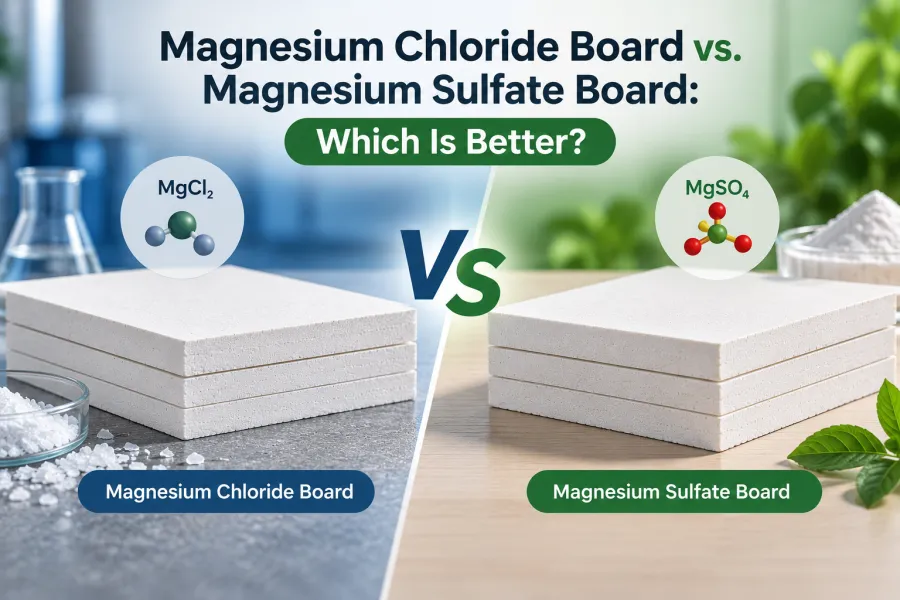
Two widely discussed types of MgO board are magnesium sulfate-based boards and magnesium chloride-based boards. They use different magnesium-based binding systems and should not be treated as interchangeable products.
Magnesium chloride-based boards can be susceptible to moisture-related problems when their formulation and manufacturing process do not adequately control free chloride and related compounds. Magnesium sulfate-based boards are often selected as an alternative where reducing chloride-related moisture concerns is a priority.
However, the binder alone does not determine whether a board is suitable for a project. Formulation, curing, reinforcement, quality control, and actual test results all matter.
👉 Check the differences between magnesium sulfate boards and magnesium chloride boards
2.3 Fillers and Functional Additives
Manufacturers may use different fillers and additives to adjust density, workability, weight, insulation characteristics, or other properties.
Depending on the product, these ingredients may include perlite, sawdust, mineral wool, mica, or other mineral and plant-based materials. Not every formulation contains all these ingredients.
The type and proportion of each component should be determined by the intended application and the manufacturer’s validated production process.
2.4 Fiberglass Mesh and Other Reinforcement
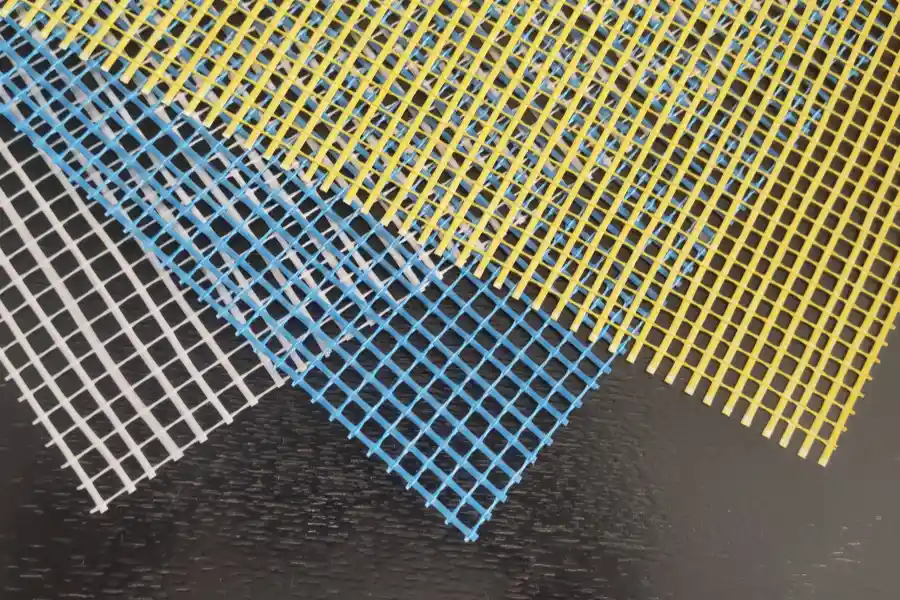
Fiberglass mesh is commonly incorporated into MgO boards to improve reinforcement and help the panel resist cracking during handling and use.
The mesh specification, placement, and compatibility with the board’s alkaline environment can influence the effectiveness of the reinforcement. Other reinforcement materials such as non-woven fabric may also be used depending on the product design.
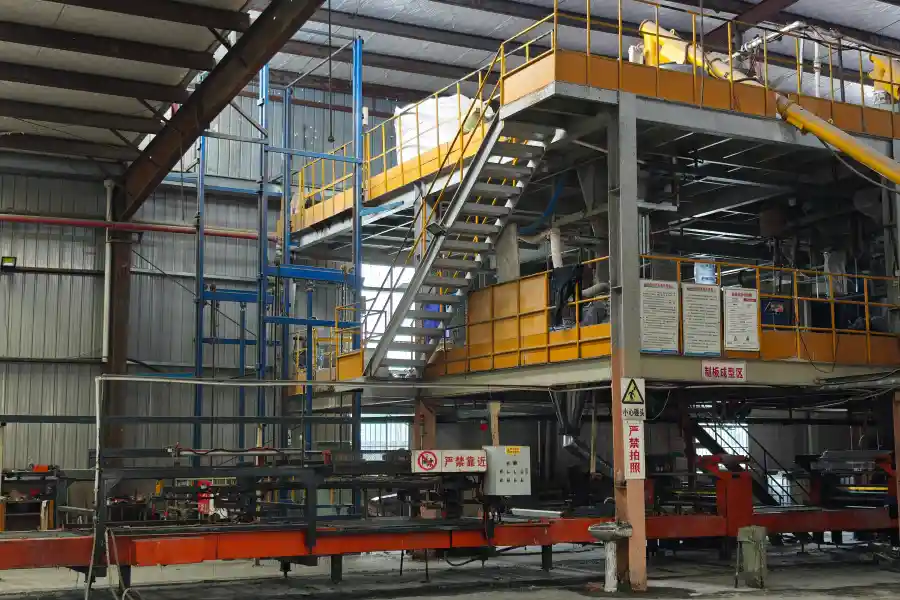
3. How Is Magnesium Oxide Board Manufactured?
The manufacturing process influences the consistency, strength, surface quality, and long-term performance of MgO board.
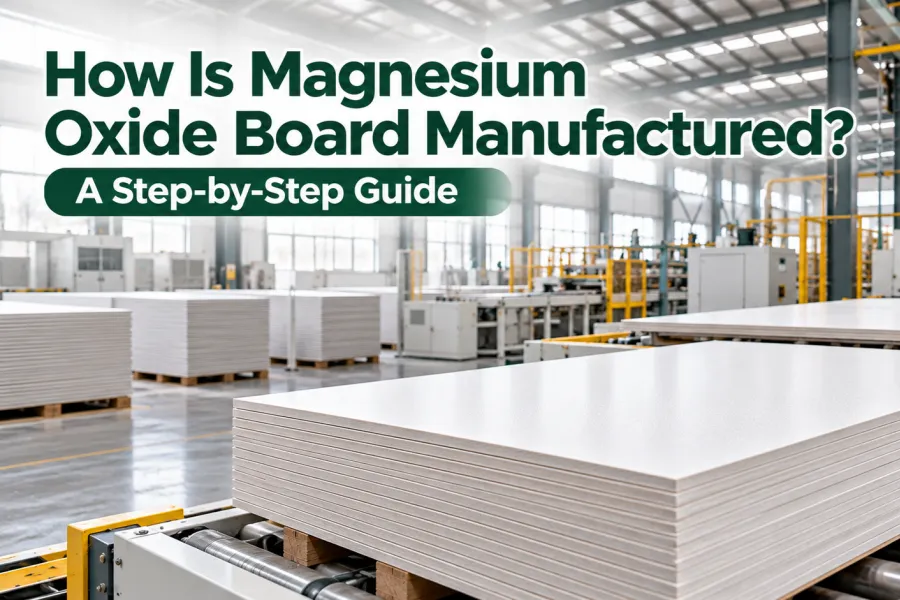
Although production lines differ, the main stages generally include raw material preparation, mixing, forming, curing, cutting, finishing, and inspection.
Step 1: Raw Material Preparation
The manufacturer prepares and measures the required raw materials according to the production formulation.
Consistency at this stage is important. Variations in material quality or proportion can affect the behavior of the mixture and the properties of the finished board.
Step 2: Mixing and Slurry Preparation
The ingredients are mixed to produce a workable mixture suitable for forming into panels.
The mixing process must provide an appropriate level of consistency. Poor dispersion or inadequate control may contribute to uneven surfaces, inconsistent density, or other production defects.
Step 3: Forming and Reinforcement
The mixture is shaped into panels, and reinforcing materials such as fiberglass mesh and non-woven fabric may be incorporated into the board structure.
The distribution and positioning of reinforcement are important to the finished product’s integrity.
Step 4: Curing
The formed panels undergo a controlled curing process that allows the material to develop its required properties.
Curing conditions and subsequent handling need to be managed carefully. A panel that has not developed sufficient strength or stability may be more vulnerable to damage or dimensional changes.
Step 5: Cutting, Finishing, and Inspection
After curing, the boards are cut to the required dimensions and may undergo sanding, edge profiling, lamination, or other finishing processes.
Finished products should be inspected for dimensions, thickness, surface defects, and other specifications relevant to the product grade.
Manufacturing quality is not determined by one step alone. Consistent raw materials, controlled production conditions, suitable curing, and reliable final inspection all contribute to the quality of the finished board.
4. Key Properties of Magnesium Oxide Board
MgO boards are available in different formulations and grades. Their properties should therefore be evaluated individually rather than assumed to be identical across all products.
4.1 Fire Performance
Fire performance is one reason MgO boards are considered for building applications where fire-resistant materials are required.
However, the fire performance of a specific board must be supported by appropriate test evidence. A manufacturer’s general description of MgO board is not a substitute for a test report covering the actual product.
It is also important to distinguish between the reaction-to-fire classification of an individual material and the fire-resistance performance of a complete construction assembly.
A wall, floor, ceiling, or door assembly may include framing, insulation, fixings, joints, sealants, and multiple layers. Its overall fire performance depends on the complete system and the applicable test or assessment.
If a project requires a particular fire classification or fire-resistance period, confirm that the documentation covers the intended product, thickness, installation method, and assembly.
4.2 Moisture Resistance
Moisture behavior is another important consideration when selecting MgO board.
Some products can perform well in suitable interior environments, but this does not mean that all MgO boards are waterproof or appropriate for prolonged exposure to water.
Performance depends on the binder system, formulation, curing, density, edge treatment, installation details, and exposure conditions.
Buyers should distinguish between moisture resistance, water absorption, dimensional stability under wet conditions, and waterproofing. These are related but different properties.
Even if a board performs well in a laboratory water-absorption test, the complete wall or floor system may still require waterproof membranes, suitable sealants, flashing, or other protective measures.
4.3 Strength and Mechanical Performance
Mechanical performance affects how a board can be handled, fastened, installed, and used.
Relevant properties may include flexural strength, impact resistance, screw-holding performance, and resistance to damage during transport and installation.
These characteristics can vary with density, thickness, reinforcement, and formulation. A board suitable for wall lining may not be suitable for direct subfloor use or applications requiring higher mechanical performance.
Where fastening performance is important, request relevant test data rather than assuming that all MgO boards provide the same screw-holding strength.
4.4 Dimensional Stability and Durability
Dimensional stability describes how well a board maintains its dimensions when environmental conditions change.
Changes in moisture and temperature may affect building panels differently. For MgO board, the stability of the binding system and the quality of manufacturing are particularly relevant.
Poorly controlled products may experience dimensional changes, surface deterioration, or other problems under unsuitable exposure conditions.
When durability is critical, review relevant test results and installation requirements, and consider whether the product has been evaluated under conditions representative of the intended application.
4.5 Density, Thickness, and Weight
Density and thickness are important selection criteria because they influence the weight, handling, stiffness, and potential applications of a board.
Thicker or denser boards may be appropriate for certain demanding applications, but higher density alone does not guarantee better overall performance.
Likewise, increasing thickness does not automatically make a product suitable for a structural or fire-rated assembly.
When comparing quotations, confirm the nominal dimensions, actual thickness tolerance, density specification, and weight per board. These details also affect container loading, freight costs, installation planning, and project calculations.
5. Advantages and Limitations of MgO Board
A balanced evaluation should consider both the potential benefits and the limitations of magnesium oxide board.
Potential Advantages
1. Mineral-based composition
MgO board is a mineral-based building panel. Depending on its formulation, it may offer an alternative to gypsum, cement, or wood-based panels in selected applications.
2. Potential for fire-related applications
Suitable MgO boards may be used in construction systems requiring specific fire-performance characteristics, provided the required testing and approvals are available.
3. Multiple product configurations
Manufacturers can offer different thicknesses, densities, edge profiles, and finishes. This flexibility allows buyers to select products for different interior and prefabricated building applications.
4. Compatibility with various finishing systems
Depending on the surface condition and product specification, MgO boards may be suitable for painting, tiling, laminating, or other finishing methods. Correct preparation and compatible installation materials are essential.
5. Options for different project requirements
Different formulations and reinforcement designs allow manufacturers to develop products for applications with different mechanical, dimensional, and finishing requirements.
Limitations and Points to Consider
1. Product quality varies
Not all MgO boards have the same composition, consistency, or performance. Buyers should evaluate the specific product rather than making purchasing decisions based solely on the material category.
2. Moisture suitability must be verified
Some MgO boards may experience moisture-related problems if their formulation or manufacturing quality is inadequate, or if they are installed in unsuitable conditions.
3. Installation requirements still apply
Correct fixing, joint treatment, edge protection, finishing, and compatibility with adjacent materials remain important. Using the wrong installation method can reduce the performance of an otherwise suitable board.
4. Not every board is structural
A board’s strength does not automatically make it a replacement for timber studs, structural sheathing, load-bearing members, or other engineered components.
5. Compliance is project-specific
Building codes and project specifications may require particular tests, certifications, approvals, or system-level evidence. A generic product description cannot establish compliance in every market.
The practical conclusion is that MgO board should be selected as a specified building product, not as a material assumed to have identical properties across all manufacturers.
6. Common Applications of Magnesium Oxide Board
6.1 Interior Walls and Partitions
MgO boards are commonly considered for interior wall linings and partition systems.
The appropriate product depends on the wall design, required finish, fixing method, impact requirements, moisture conditions, and any fire or acoustic performance targets.
For projects requiring a fire-rated partition, verify the performance of the complete tested or assessed assembly rather than selecting the board based on a standalone material claim.
6.2 Ceilings
MgO boards may be used for selected ceiling applications.
Important considerations include board weight, support spacing, fastening requirements, installation height, and the conditions in the space above the ceiling.
The board and supporting framework should be suitable for the expected loads and environmental conditions.
6.3 Flooring and Subfloors
Some MgO boards are manufactured for flooring or subfloor applications, where higher density or specific mechanical properties may be required.
A wall-grade board should not automatically be substituted for a flooring-grade product. Floor applications may involve concentrated loads, repeated foot traffic, movement in the supporting structure, and compatibility with adhesives or floor finishes.
Before selecting a product, check the manufacturer’s installation instructions, load requirements, support spacing, and relevant mechanical test data.
6.4 Fire Door Components
MgO boards may be incorporated into selected fire door designs.
The performance of a fire door depends on the complete door assembly, including its core, facings, frame, seals, hardware, dimensions, and manufacturing process.
Using an MgO board does not by itself establish that a finished door meets a required fire rating. The complete door system must have the relevant evidence for the intended market.
6.5 SIPs and Modular Construction
MgO boards can serve as facings or sheathing in certain structural insulated panel (SIP) and modular construction systems.
In these applications, the board is only one part of a larger engineered assembly. The core material, adhesives, framing, connections, panel geometry, and load paths all influence the final system performance.
If the panel is intended to carry structural loads or meet fire, thermal, or building-code requirements, the complete assembly must be designed and verified for those purposes.
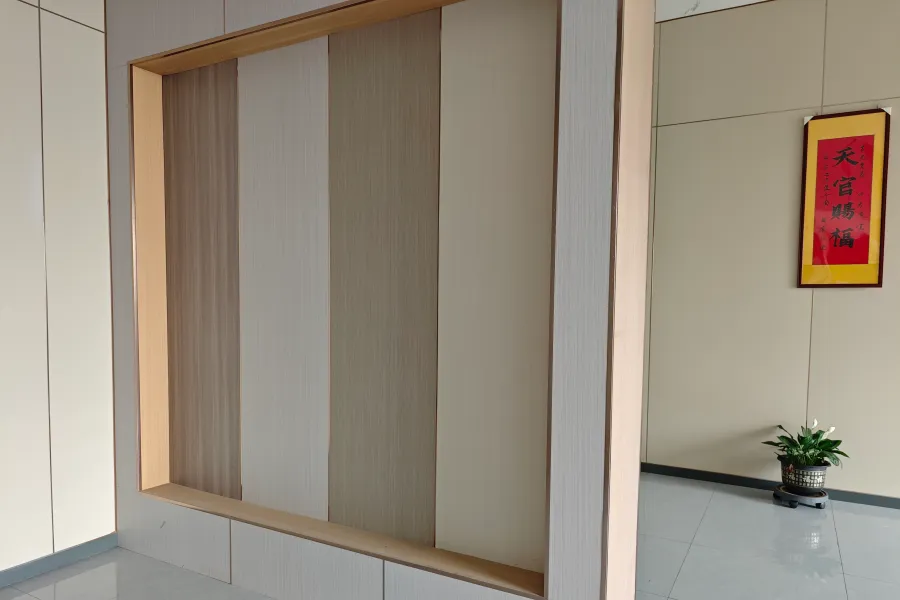
6.6 Decorative and Laminated Panels
Some MgO boards are supplied with decorative surface finishes, including PVC laminates or wood-grain and stone-grain designs.
These products can be useful when a project requires a finished appearance without applying a separate decorative coating on site.
Buyers should confirm the surface finish, bonding quality, edge treatment, cleaning requirements, and suitability for the intended environment.
👉️ Check Machi’s MgO board collections
7. MgO Board Compared with Other Building Boards
MgO board is not automatically better than every alternative. The most appropriate material depends on the project requirements and the complete construction system.
| Material | Typical considerations | Important limitations to check |
|---|---|---|
| MgO board | Mineral-based panel available in different formulations, densities, and finishes | Quality consistency, moisture behavior, mechanical properties, and product-specific test evidence |
| Gypsum board | Commonly used for interior walls and ceilings; widely available finishing systems | Moisture suitability, impact resistance, and requirements for specialized applications |
| Cement board | Often considered for applications requiring cementitious panels and certain moisture-exposed environments | Weight, cutting and installation requirements, and product-specific limitations |
| OSB | Wood-based panel commonly used in sheathing, flooring, and engineered building systems | Moisture exposure, structural grade, panel ratings, and intended use |
MgO Board vs. Gypsum Board
MgO board and gypsum board have different compositions and product characteristics. The choice depends on the required fire performance, weight, installation method, surface finish, moisture conditions, cost, and local availability.
For many interior applications, either may be suitable if the complete system meets the project specification.
MgO Board vs. Cement Board
Cement board may be appropriate for applications that require a cementitious panel. MgO board may offer advantages for particular product configurations or project requirements.
However, moisture suitability, mechanical performance, weight, and installation requirements must be compared using the actual products under consideration.
MgO Board vs. OSB
OSB is a wood-based engineered panel used in many structural and sheathing applications. MgO board is a mineral-based panel with different characteristics.
They should not be considered direct substitutes in every application. If a project proposes replacing OSB with MgO board, the designer must verify structural performance, fastening, panel connections, moisture behavior, and compliance of the complete assembly.
8. How to Choose the Right MgO Board
Selecting the right product begins with the application, not with the lowest quoted price.
Step 1: Define the Intended Application
Tell the manufacturer whether the board will be used for walls, ceilings, floors, door components, SIPs, decorative panels, or another purpose.
Explain whether the application is interior or exterior and describe any exposure to moisture, temperature variation, or other demanding conditions.
Step 2: Confirm Thickness and Density
Specify the required thickness, dimensions, density, and tolerances.
If the project has mechanical or weight restrictions, communicate them before requesting a quotation. The manufacturer can then recommend a suitable product grade for evaluation.
Step 3: Identify Performance Requirements
List the performance criteria that matter to the project, such as:
- Fire classification or fire-resistance requirements
- Water absorption or moisture-related performance
- Flexural strength and impact resistance
- Screw-holding or fastening requirements
- Dimensional stability
- Surface finish and compatibility with other materials
Not every project needs every test. Select requirements according to the application and applicable regulations.
Step 4: Review Technical Documents
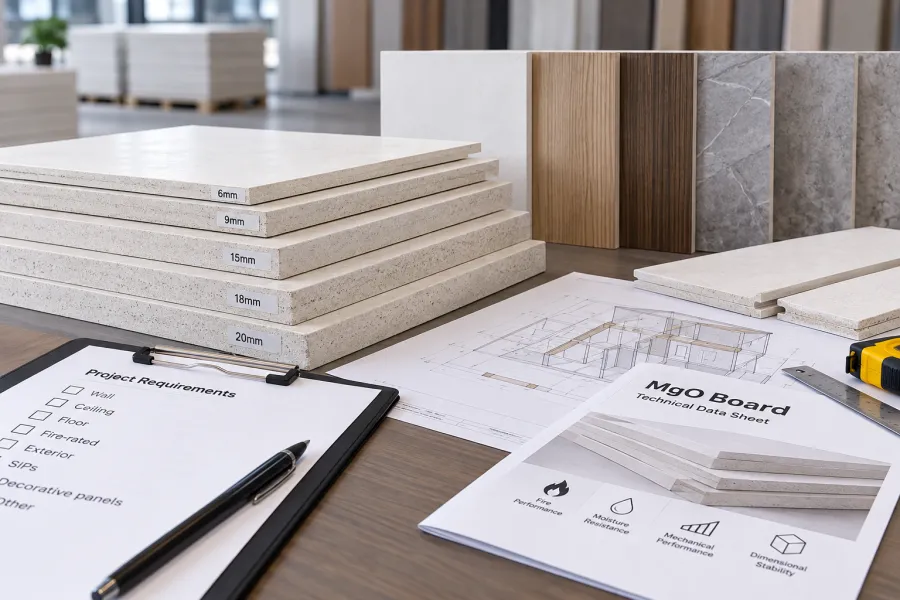
Request the technical data sheet, installation instructions, and relevant test reports.
Check whether the reports identify the actual product and whether the tested thickness, formulation, and assembly correspond to the intended use.
If a specific certification or approval is mandatory, confirm its scope, validity, and acceptance in the destination market.
Step 5: Check Installation and Finishing Compatibility
Discuss fixing methods, support spacing, joint treatment, adhesives, coatings, membranes, and edge protection.
This is particularly important for flooring, wet areas, exterior applications, and systems requiring a specific fire or structural performance.
Step 6: Evaluate the Supplier
For importers and distributors, the supplier’s consistency and communication are as important as the initial product sample.
Consider production capacity, quality-control procedures, packaging, lead time, export experience, documentation, and the ability to maintain specifications across repeat orders.
A clear specification agreed before production helps reduce misunderstandings and makes incoming quality checks more practical.
9. How Is MgO Board Tested for Quality and Performance?
Quality evaluation should combine product inspection with appropriate laboratory testing.
Physical Inspection
Routine inspection may include board length, width, thickness, edge condition, surface flatness, visible defects, and other requirements specified in the purchase agreement.
Density and weight may also be checked where they are part of the agreed specification.
Mechanical Testing
Depending on the intended use, relevant mechanical tests may include flexural strength, impact performance, or fastening-related properties.
The correct test method and acceptance criteria should be selected for the product and its application.
Moisture-Related Testing
Where moisture performance is important, ask for relevant water absorption, dimensional stability, or other applicable test results.
For products where chloride-related moisture concerns are relevant, buyers may also request suitable chloride-content testing. It is important to understand exactly what the report measures: total chloride content and leachable chloride content are not necessarily the same measurement.
Fire Testing and Compliance Documentation
Fire-related requirements vary by market and application. A project may require material classification, fire-resistance testing of an assembly, or additional local approvals.
Confirm the applicable standard and whether the evidence covers the intended end use.
A test report should be evaluated in context. Check the tested sample identification, product thickness, test method, laboratory information, result, and scope of application. Do not assume that a report for one product automatically covers every product supplied by the same manufacturer.
10. Frequently Asked Questions About MgO Board
Is magnesium oxide board waterproof?
No. Some products may offer suitable moisture resistance for defined applications, but this does not make every MgO board waterproof. Check product-specific test data and follow the manufacturer’s installation and waterproofing requirements.
Can MgO board be used outdoors?
Outdoor suitability depends on the specific board, exposure conditions, installation details, and protective system. Do not assume that a board suitable for interior use is suitable for prolonged exterior exposure. Obtain documented evidence before specifying it outdoors.
Can MgO board be painted?
Many MgO boards can be painted if the surface is properly prepared and the coating system is compatible with the product. Follow the manufacturer’s recommendations for surface preparation, primers, drying conditions, and paint selection.
Is MgO board easy to cut and install?
MgO board can generally be cut and fixed using suitable tools and installation methods. The correct approach depends on board thickness, density, reinforcement, and the required finish. Follow the manufacturer’s safety and installation instructions.
What is the difference between magnesium sulfate and magnesium chloride board?
The main difference is the magnesium-based binding system. Their formulation and moisture-related behavior can differ, so buyers should compare the finished products using relevant technical data and test reports rather than relying only on the binder name.
Can MgO board replace OSB or structural timber?
Not automatically. MgO board may be suitable for selected sheathing or engineered panel systems, but it should not be assumed to replace structural timber, load-bearing members, or OSB in every application. Structural substitutions require appropriate engineering assessment and evidence.
What documents should I request from an MgO board manufacturer?
Depending on your project and market, request a technical data sheet, installation instructions, relevant test reports, quality specifications, and any required certification or compliance documentation. Also confirm the product dimensions, thickness tolerances, density, packaging, and order requirements.
How do I choose a reliable MgO board supplier?
Evaluate product consistency, manufacturing controls, technical documentation, production capacity, communication, packaging, delivery reliability, and experience supplying your destination market. Samples and reports should be checked against the specifications agreed for bulk orders.
Have Questions About MgO Board?
If you have any questions about magnesium oxide board, product specifications, or its suitability for your project, feel free to contact our team. We’ll be happy to help.